A comprehensive eye exam does two things at once. It measures how well you see, and it checks the health of your eyes. The second part is the one most people do not expect, and it is often the more important of the two.
Here is what happens at each step, and why it matters.
Before you see the doctor
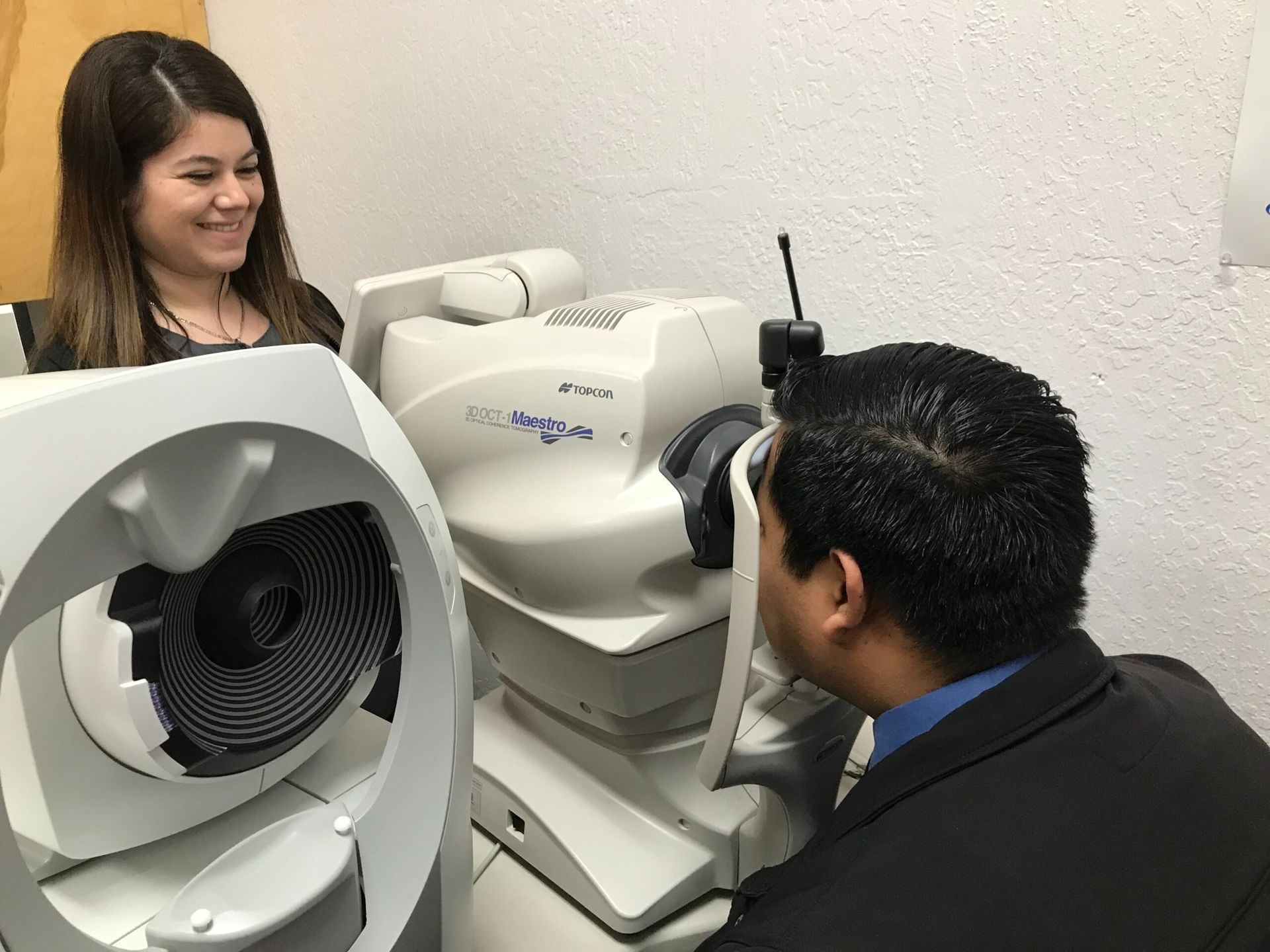
Your visit begins with pretesting. One of our technicians takes a few measurements that give the doctor a starting point.
The first is auto-refraction. The instrument measures how light changes as it enters your eye and estimates your prescription. Nothing touches your eye.
That estimate is a starting point, not your final prescription.
Refining the prescription
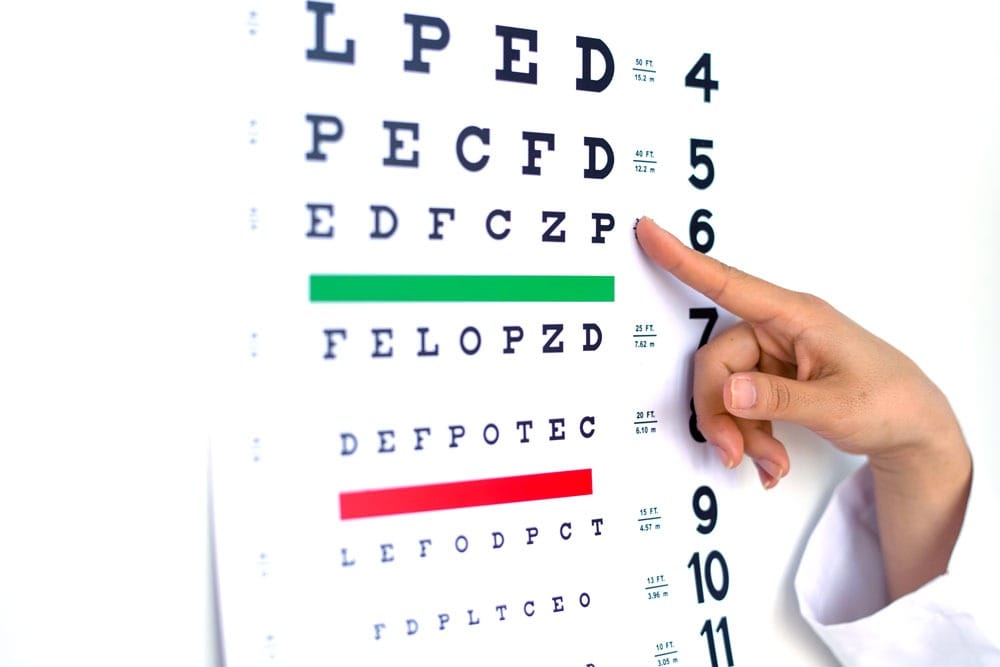
Dr. Prewett then performs the examination and refines the measurement himself. This is the part most people picture: comparing one lens against another until the letters sharpen.
The auto-refractor gets us close. The doctor's refraction accounts for how your eyes focus, how they work together, and what you actually need for reading, driving, and screen work.
Checking eye health
A prescription tells us how you see. It does not tell us whether your eyes are healthy. That difference is also why a vision screening is not the same as an eye exam.
During the exam we examine:
- The front surface of the eye, including the cornea and tear film
- The lens inside the eye
- The retina and optic nerve at the back of the eye
- How your eyes move and work together
Many eye conditions cause no symptoms early on. Checking eye health at every visit is how quiet changes get found before you notice them.
When we recommend additional testing
Depending on your symptoms, exam findings, and health history, the doctor may recommend imaging or additional testing.
Retinal photography and OCT imaging help us examine structures at the back of the eye in more detail and document them, so this year can be compared against next year. We explain why a test is being recommended before it happens.
Not every patient needs advanced testing. If your vision drifts in and out rather than being steadily blurry, see why vision goes in and out of focus. If you want the longer explanation, we wrote one on advanced diagnostic testing.
What you leave knowing
By the end of the visit you should know:
- Whether your prescription changed
- What we saw when we examined your eye health
- Whether anything needs monitoring, treatment, or a follow-up
- What the next step is, and when
If glasses are part of the plan, our optical team can help you with frames and lenses while you are here. If you have wondered what the numbers on your prescription mean, we explain them in what the numbers on your glasses prescription mean.
Common questions
How long does an exam take?
It depends on the testing your exam includes. Our front desk can give you an estimate when you schedule.
What should I bring?
A list of your current medications, your current glasses, photo ID, and all insurance cards. If you wear contact lenses, bring them or the box they came in.
Do you accept Medicare and CenCal/Medi-Cal?
Yes. We accept Medicare and CenCal/Medi-Cal for patients of all ages. CenCal eyewear benefits may also apply depending on eligibility and coverage.
Will my eyes be dilated?
Sometimes. Dilation gives the doctor a detailed look at the back of your eye, and the doctor will tell you if it is needed. If your eyes are dilated, bring sunglasses and consider having someone drive you home. See what to expect from dilation.
Is someone available who speaks Spanish?
Yes. Our entire staff is bilingual in English and Spanish.
Schedule an exam
We see patients of all ages, and we take time to explain what we are checking and what happens next.
Request an appointment or call 805-925-9575.