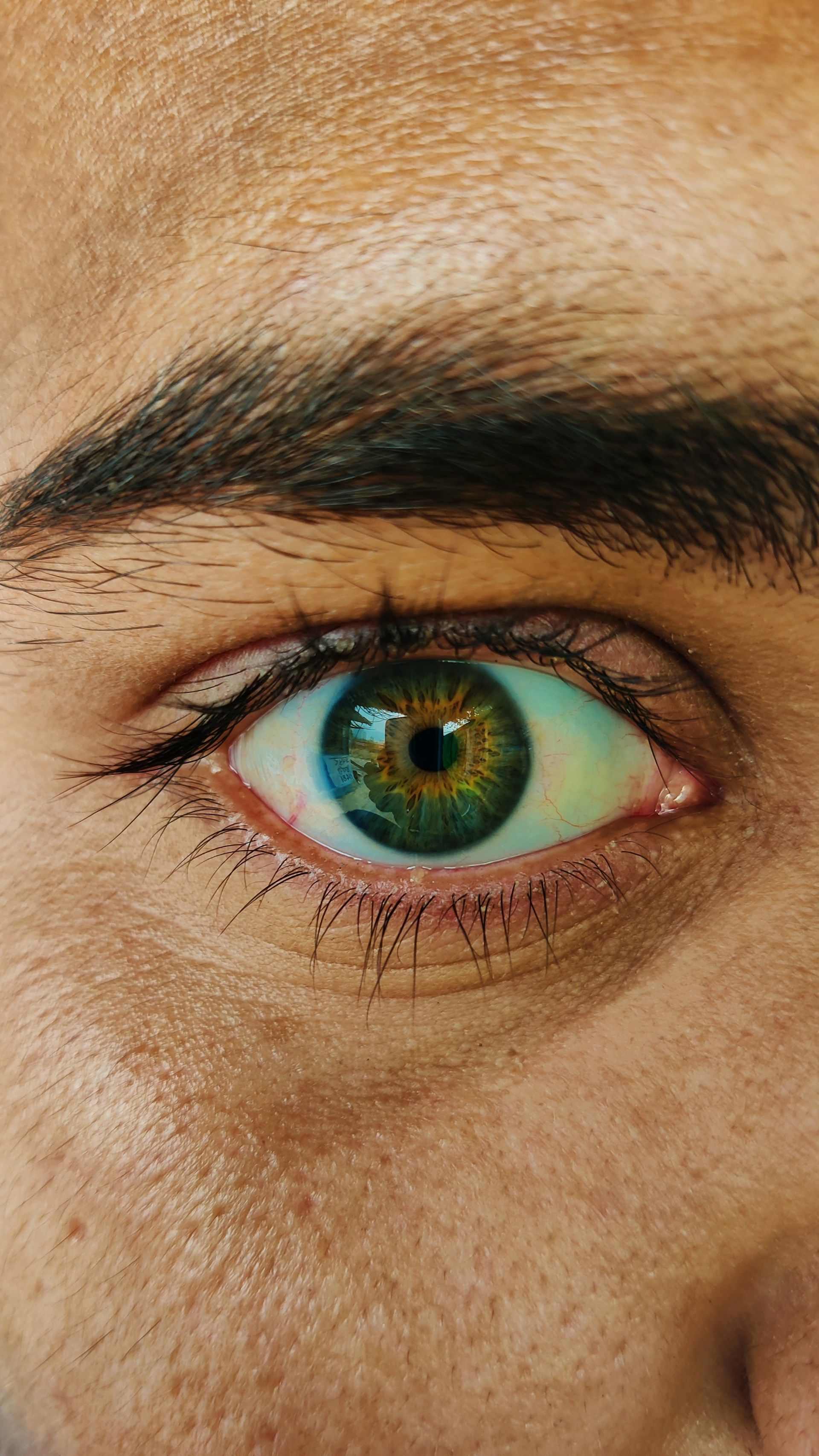
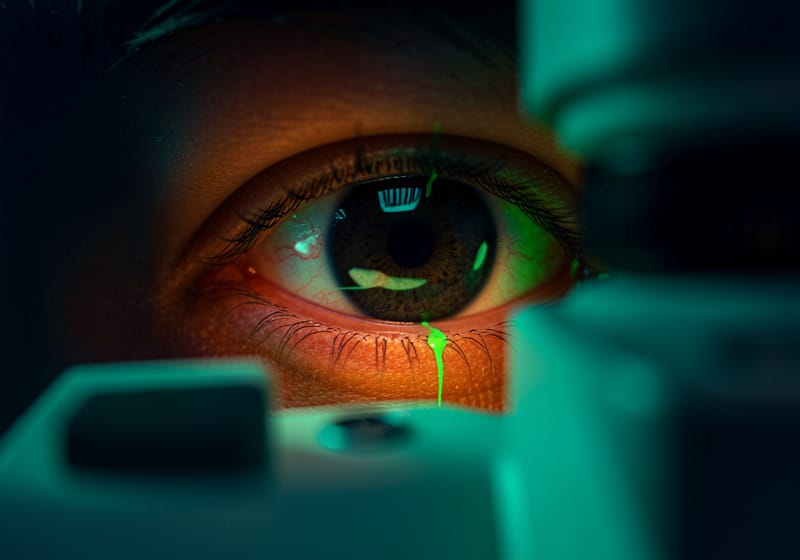
Dry eye does not always feel dry. It often feels gritty, or watery, or like your vision keeps going soft and then clearing when you blink.
Those symptoms have different causes, and the cause determines what actually helps.
Why watery eyes can mean dry eyes
This is the one that surprises people most.
When the surface of your eye becomes irritated, it can trigger a flood of reflex tears. Those tears are watery and lack the oil that would keep them from evaporating, so they run down your cheek instead of coating your eye.
You end up with eyes that water constantly and still feel dry.
Common causes
Blocked oil glands
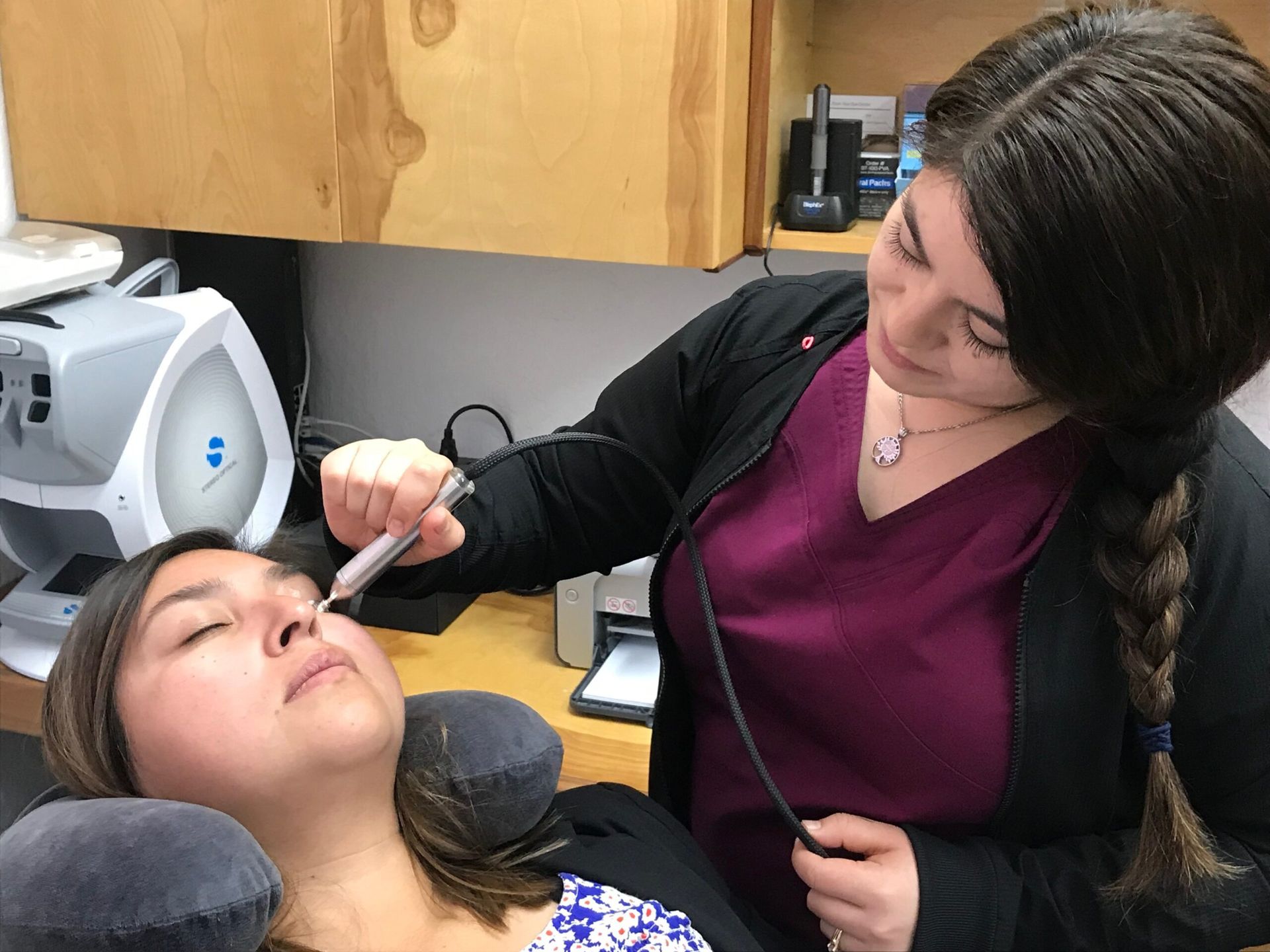
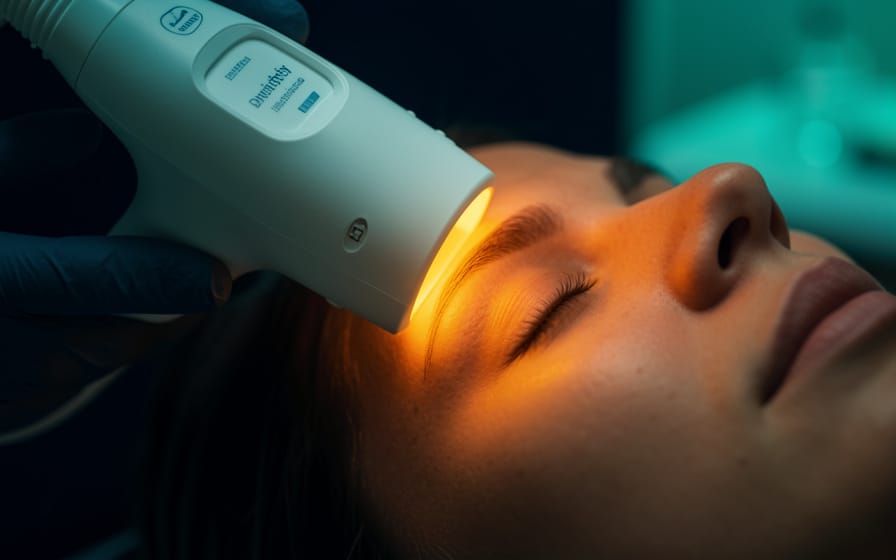
The meibomian glands in your eyelids produce the oil layer of your tears. When they are blocked or underproducing, tears evaporate too quickly. This is one of the most common causes we see. It has a name and a treatment path: meibomian gland dysfunction.
Eyelid inflammation
Redness and crusting along the lash line irritates the eye surface and interferes with the glands sitting right there.
Allergies
Itching is the giveaway. Allergy and dry eye often overlap, and allergy drops alone may not settle things if the tear film is also unstable. See itchy, watery eyes: allergies or dry eye.
Medications
Antihistamines, some blood pressure medications, antidepressants, and others can reduce tear production. This is why we ask for a current medication list.
Screen time
You blink less when concentrating on a screen, sometimes by half. Fewer blinks means a less frequently renewed tear film.
Environment
Wind, dry air, car vents aimed at your face, and long drives all speed up evaporation.
Lenses depend on a stable tear film. When lenses that were once comfortable stop being comfortable, the tear film is often what changed.
What you can try first
For mild, occasional symptoms, these are reasonable:
- Preservative-free artificial tears
- Warm compresses on closed eyelids
- Aiming vents away from your face
- Taking deliberate breaks from screens
- A humidifier in dry rooms
When to have it looked at
Make an appointment if:
- Symptoms persist despite drops, or drops help for only a short time
- Your vision fluctuates through the day, which we cover in why vision goes in and out of focus
- Your eyes are red most days
- Contact lenses have become hard to tolerate
- There is pain, light sensitivity, or a sudden change in vision
That last group should be seen promptly rather than watched.
Drops that stop working after twenty minutes are a signal, not a failure on your part. They add moisture but do not open a blocked gland or address inflammation. Our dry eye treatment article covers what an evaluation involves and the treatment options at our Dry Eye Clinic.
Common questions
Are more expensive drops better?
Not necessarily, though preservative-free versions are gentler if you use drops several times a day.
Can dry eye damage my eyes?
Persistent dryness can irritate the corneal surface, which is a reason to treat the cause rather than only the symptom.
Is it worse as you get older?
Tear production tends to decrease with age, and it is more common after menopause. It is common but it is still treatable.
Get it checked
Request an appointment or call 805-925-9575.