Meibomian gland dysfunction, usually shortened to MGD, means the oil glands in your eyelids are not doing their job. It is one of the most common reasons people have dry-eye symptoms that artificial tears do not fix.
If drops help for twenty minutes and then stop, this is often why.
What the glands do
You have roughly thirty of these glands in your upper eyelid and about twenty-five in the lower, lined up behind your lashes. They open along the eyelid margin.
Each blink presses a small amount of oil onto the surface of your tear film. That oil layer slows evaporation and keeps the film stable between blinks.
Without enough oil, tears evaporate too quickly. The eye reacts to the unstable surface by producing more watery tears, which is why MGD often shows up as watering rather than dryness. We cover that pattern in common causes of dry, gritty, or watery eyes.
What goes wrong
Two things, often together.
The oil thickens. Healthy meibum is about the consistency of olive oil. When it thickens toward something more like toothpaste, it stops flowing through the opening.
The opening blocks. Once flow slows, the gland opening can become capped. Oil backs up behind it.
Glands that stay blocked for a long time can shorten or drop out. Blocked glands can also produce styes and eyelid bumps. That part matters, because gland tissue that is lost does not come back. It is a reason to look at symptoms sooner rather than later.
Symptoms that point toward MGD
- Burning or a gritty feeling that builds through the day
- Watering eyes, especially outdoors or in wind
- Vision that blurs and then clears when you blink
- Redness or crusting along the lid margin
- Eyelids that feel heavy or tired
- Contact lenses that have become harder to tolerate
None of these confirms MGD on its own. Together, and worsening through the day, they are worth an evaluation.
How we evaluate it
- We talk through your symptoms. When they started, what makes them worse, what you have tried, and which medications you take.
- We examine the lid margins under magnification. The doctor looks at the gland openings, the oil that expresses from them, and the condition of the lid.
- We assess the tear film. How quickly it breaks down after a blink tells us how unstable the surface is.
- We explain what we found. You see your own results and leave understanding which part of the problem applies to you.
Why treatment is not just drops
Artificial tears add moisture to the surface. They do not open a capped gland, thin the oil inside it, or reduce inflammation along the lid margin.
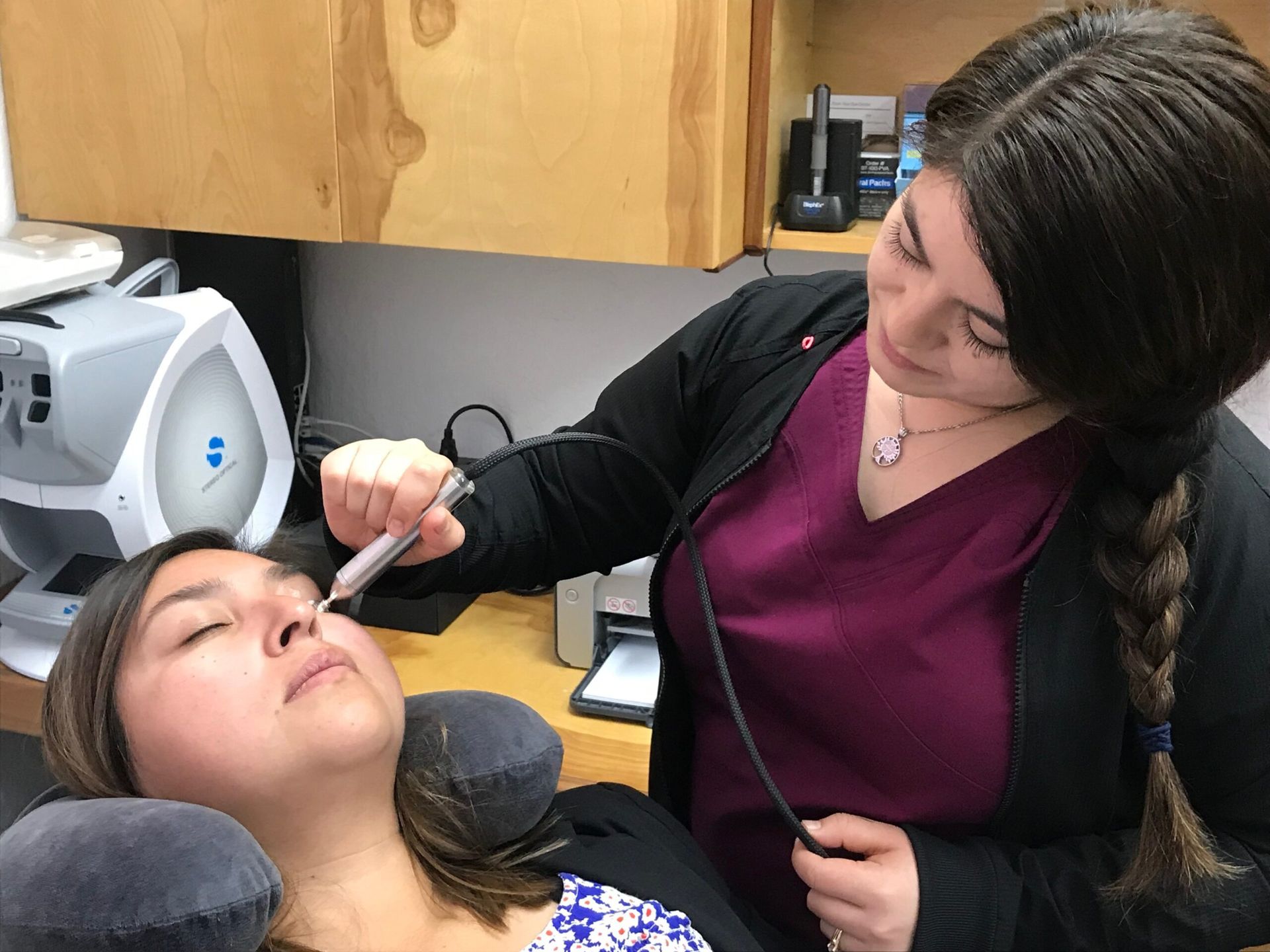
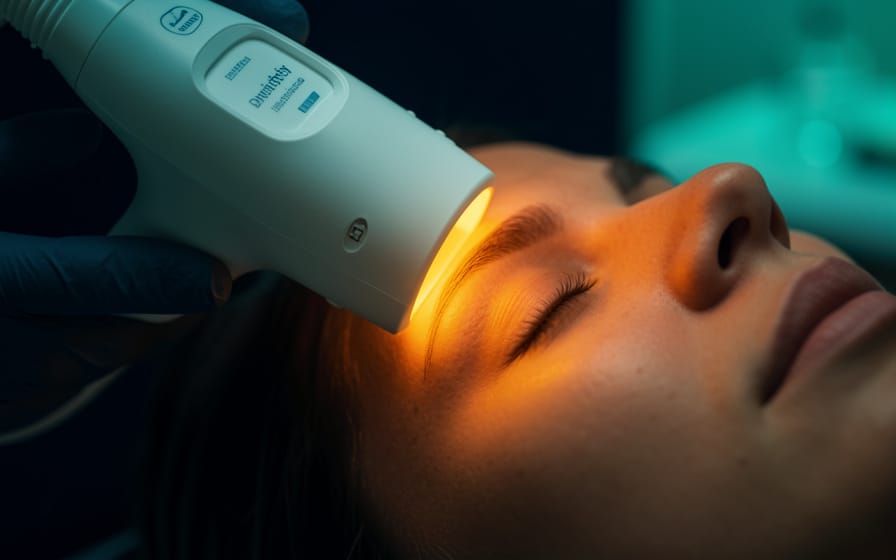
Treatment aimed at MGD works on the glands themselves. At our Dry Eye Clinic that includes MiBoFlo heat massage, where a handheld tip warmed to about 108 degrees Fahrenheit is used with ultrasound gel to massage the eyelids while your eyes stay closed. The goal is to improve gland function. We also use photobiomodulation and radiofrequency as part of a dry-eye plan.
Because MGD is a long-term condition, treatment is usually scheduled as a recurring series with follow-up rather than a single visit. The full picture is in dry eye treatment.
What helps at home
These support treatment rather than replace it:
- Warm compresses on closed eyelids
- Gentle lid hygiene along the lash line
- Deliberate full blinks during screen work
- Keeping vents and fans off your face
Common questions
Is MGD the same as dry eye?
It is one of the main causes. Dry eye is the symptom picture, MGD is a mechanism behind it.
Is it permanent?
It is usually managed rather than cured, and management works better when it starts before glands are lost.
Does the treatment hurt?
MiBoFlo is a warm massage over closed eyelids. Most people find it comfortable.
Is it covered by insurance?
Dry eye is a medical condition, so it is often billed to medical insurance rather than a vision plan. Coverage varies. Call the office and our team will check.
Get evaluated
If your eyes burn or water by mid-afternoon and drops are not lasting, this is worth measuring rather than guessing at.
Request an appointment or call 805-925-9575.