A prescription tells us how well you see. It does not tell us what is happening inside the eye.
Detailed testing helps us look more closely at the retina, optic nerve, and visual pathway, and document what we find so it can be compared over time.
Structure and function
Testing falls into two groups, and they answer different questions.
Structural testing shows what the tissue looks like. Imaging can reveal thinning, swelling, or bleeding that is not visible from the outside.
Functional testing shows how well the visual system is working. Signals can weaken before structural damage is obvious. Eye pressure is a separate measurement again, explained in what eye pressure means.
Using both gives a fuller picture than either alone.
What we use and what it helps with
OCT imaging
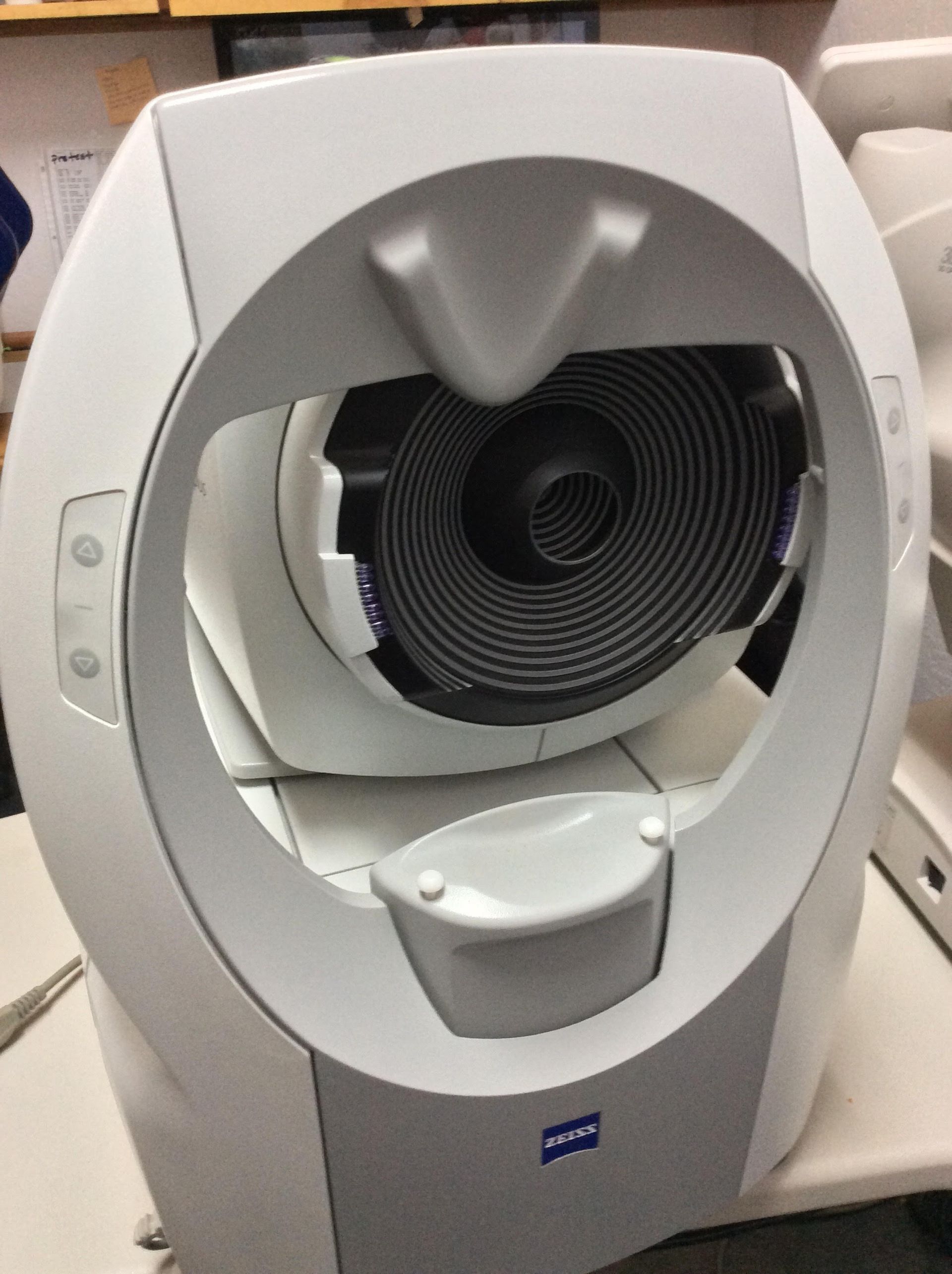
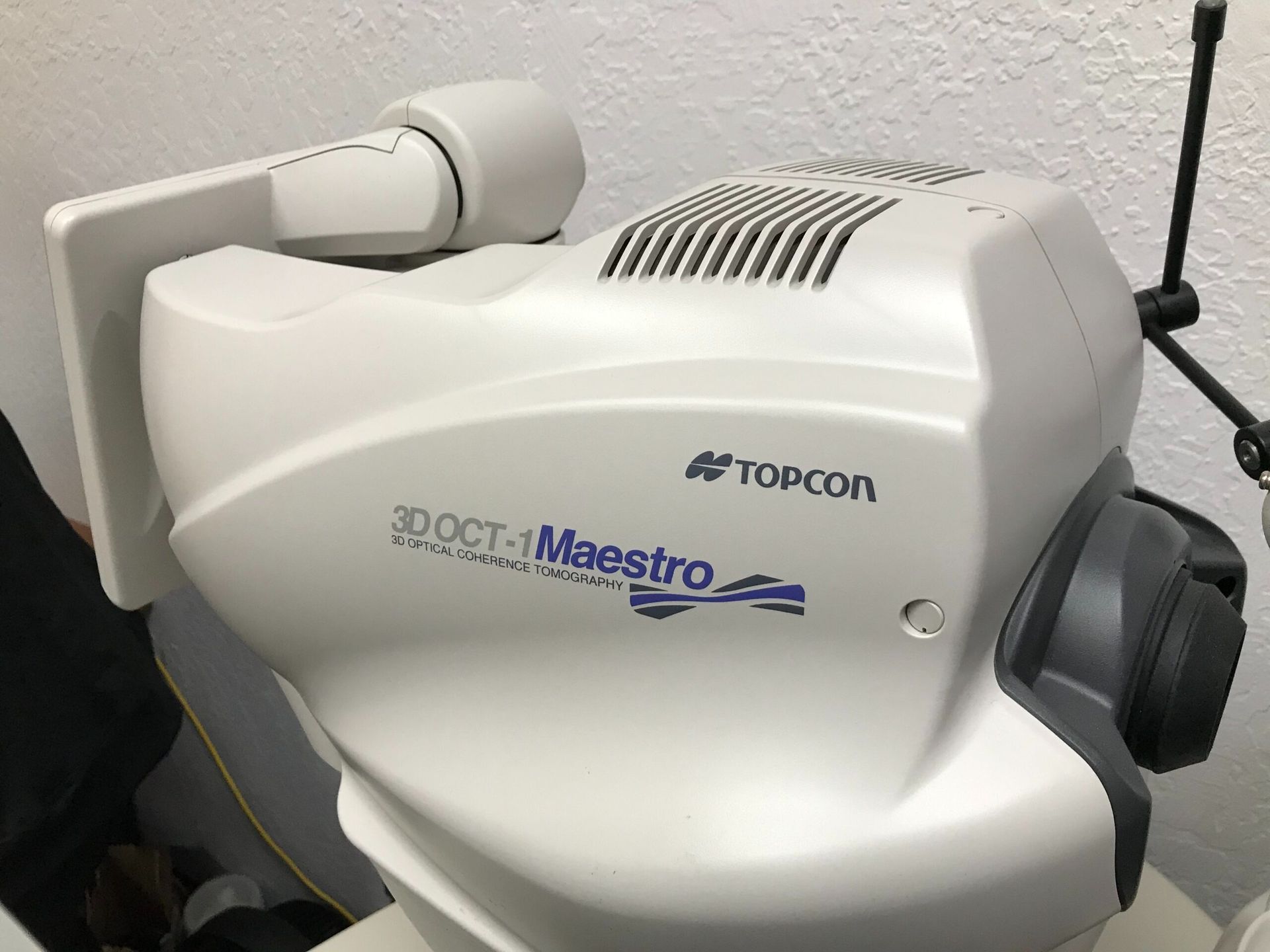
OCT produces cross-sectional images of the back of the eye. It helps the doctor examine retinal and optic-nerve structures and document changes between visits.
It is often useful in the context of diabetes, high blood pressure, macular conditions, and glaucoma monitoring where clinically appropriate. The blood pressure side is covered in how high blood pressure affects your eyes. We wrote more about this in understanding OCT and retinal imaging.
Retinal photography
A documented, wide view of the retina. The value is comparison. A photo from this year sitting next to one from three years ago makes gradual change visible.
Visual electrophysiology
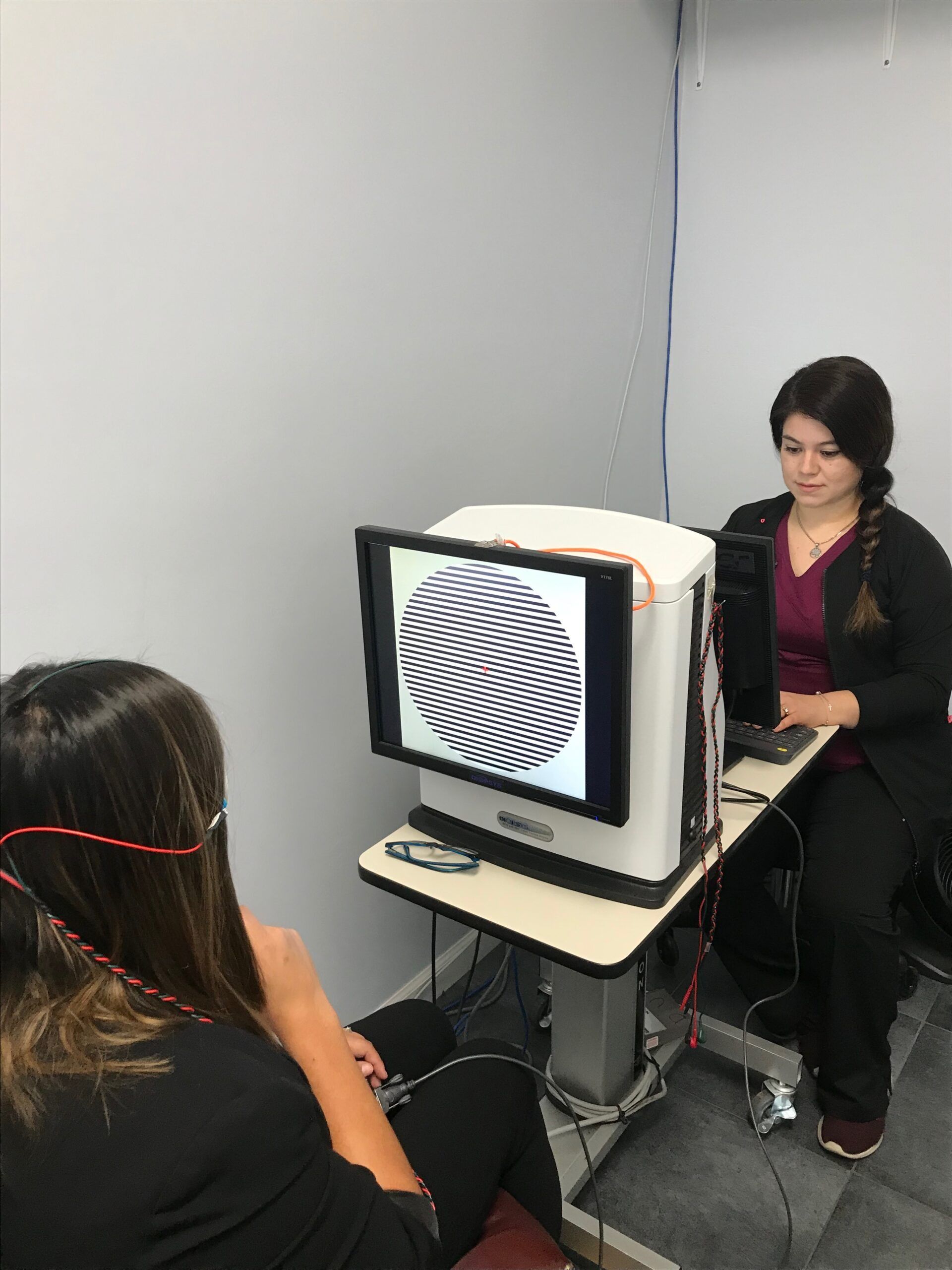
We use Diopsys equipment to measure visual responses. Visual electrophysiology can provide functional information about how visual signals travel through the eye and visual pathway.
iProfiler
Measures optical characteristics that can help refine the prescription and support personalized lens design.
Why comparison matters more than any single test
One set of images is a baseline. It tells us what your eyes look like now.
The value builds as results accumulate. Many of the conditions we monitor progress slowly and without symptoms, so the question is rarely "is this normal" in isolation. It is "has this changed since last time."
That is why we recommend regular exams even when nothing feels wrong.
What testing does not do
We want to be clear about the limits.
No device diagnoses a condition on its own. Imaging and functional testing support the doctor's evaluation and give him more to work with. They do not replace his judgment, and they do not mean every patient needs every test.
When we recommend a test, we explain what we are looking for and why.
Common questions
Does testing hurt?
No. Imaging is non-contact, and electrophysiology uses small sensors placed on the skin. You sit still and look at a target.
Do I need advanced testing at every visit?
No. The doctor recommends testing based on your symptoms, exam findings, and health history. Some patients have it annually for monitoring, and many patients do not need it at all.
Is it covered by insurance?
It depends on the reason for the test and your plan. Testing ordered for a medical reason is often billed to medical insurance. Call our office and we can help you understand what applies.
Can you send results to my other doctors?
Yes. When findings are relevant to your care with a primary care physician or specialist, we can coordinate.
Schedule an exam
If it has been a few years, a current baseline is worth having.
Request an appointment or call 805-925-9575.