Glaucoma damages the optic nerve slowly and without pain. Vision loss starts in the periphery, where you are least likely to notice it, and the brain fills in the gaps.
By the time most people notice a change, some nerve tissue has already been lost. It cannot be recovered, which is why monitoring matters more here than almost anywhere else in eye care.
Eye pressure is only part of the picture
Elevated eye pressure is a major risk factor, and we measure it at your exams.
But pressure alone is not enough to answer the question. Some people have high pressure and never develop glaucoma. Others develop it at pressures considered normal. We unpack that in does high pressure mean glaucoma.
So we look at three things together.
The three pieces
Eye pressure
A risk factor and a treatment target. If treatment is started, pressure is often how we measure whether it is working.
Optic nerve imaging
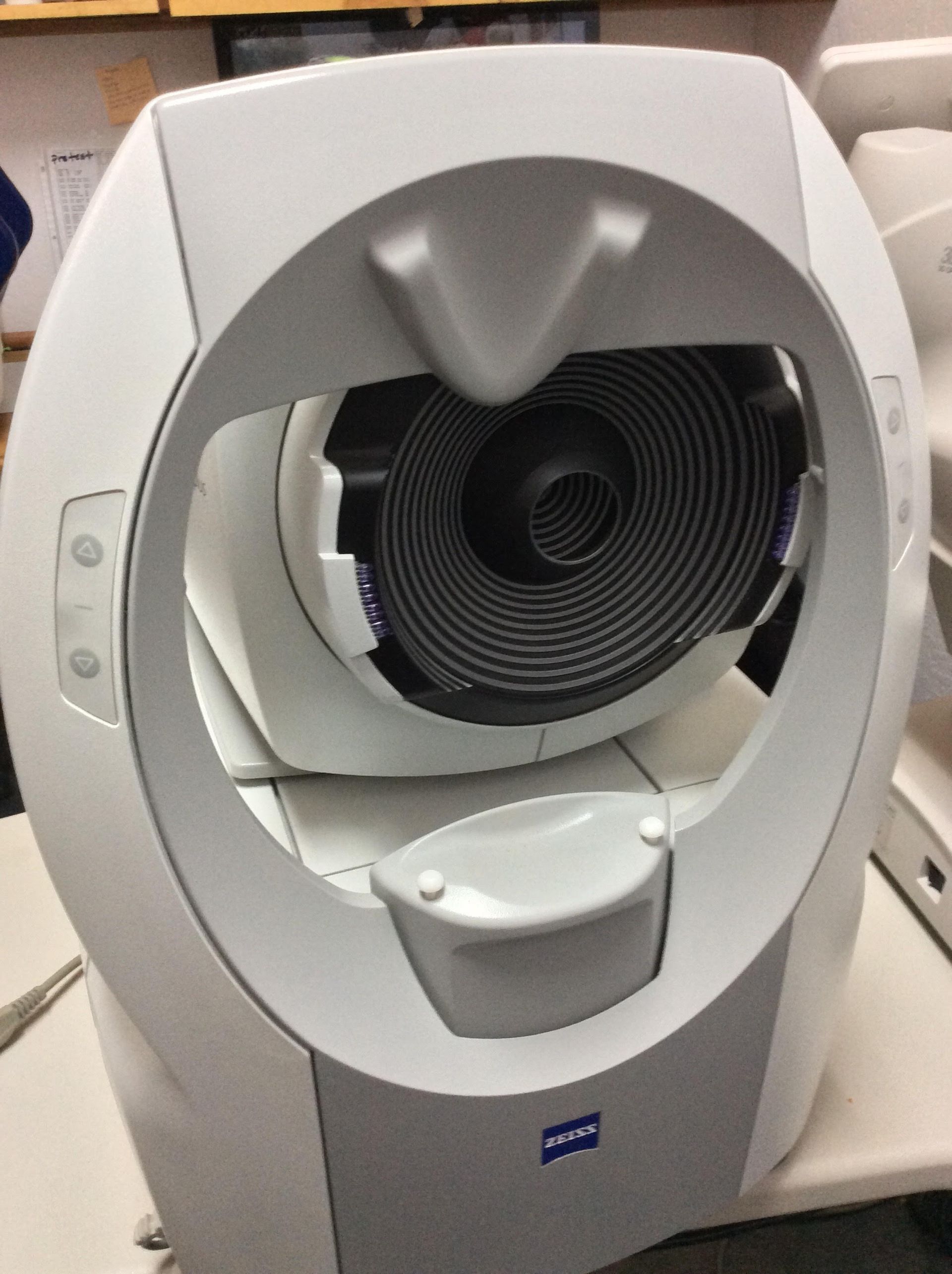
OCT imaging helps us examine the optic nerve and the nerve fiber layer around it, and document its thickness. Thinning over time is one of the clearer signals that something is progressing.
Functional testing
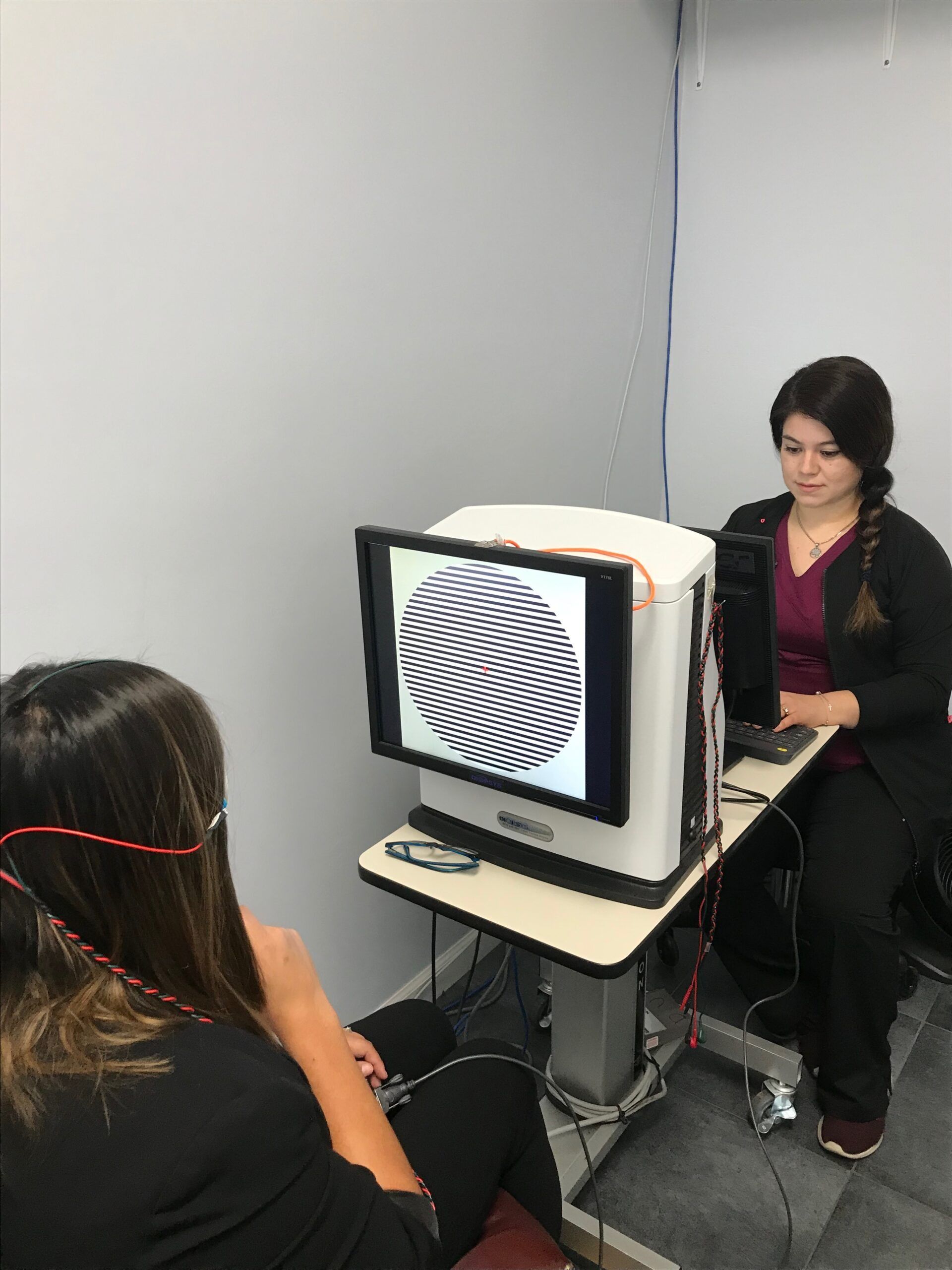
This measures function rather than structure. Visual electrophysiology, such as Diopsys, records how visual signals travel from the eye to the brain, and adds functional information to the imaging.
Structure and function do not always change at the same rate. Watching both is more informative than either alone.
Why the first visit cannot answer everything
Glaucoma is diagnosed and monitored through change over time.
A first set of results establishes a baseline. It tells us what your optic nerve looks like now. Whether that represents damage, or simply how your eyes have always been, often becomes clear only when we compare against later results.
This is why we ask patients being monitored to keep their follow-up appointments even when nothing feels different.
Who is at higher risk
Risk goes up with:
- A family history of glaucoma
- Increasing age
- Elevated eye pressure
- African American or Hispanic ancestry
- Certain other eye and health conditions
If glaucoma runs in your family, tell us. It changes how closely we watch. Sudden symptoms are a different matter: see flashes and floaters.
Common questions
Does glaucoma testing hurt?
No. Pressure measurement is brief, imaging is non-contact, and functional testing records your responses while you look at a target.
If I am diagnosed, will I go blind?
Most people who are diagnosed and treated keep useful vision. The concern is glaucoma that goes undetected for years, which is what regular exams are for.
How often will I need monitoring?
That depends on your findings and risk. The doctor will give you an interval rather than leaving it to you to decide.
Do you manage glaucoma here?
Dr. Prewett has been certified for the treatment and management of glaucoma since 2001. When a case calls for care beyond our scope, we coordinate the referral.
Schedule an exam
If glaucoma runs in your family, or it has been a few years since your last exam, this is worth doing now.
Request an appointment or call 805-925-9575.