Dry eye is rarely just "not enough tears." Usually something specific is disrupting the tear film, and the treatment depends on which part is not working.
That is why drops help some people for twenty minutes and do nothing for others.
What your tears actually do
The film of moisture across the front of your eye has structure. An oil layer slows evaporation, a watery layer rinses and nourishes the surface, and a mucus layer helps everything spread evenly.
When the oil layer is thin, tears evaporate too quickly. Your eyes feel dry even though they water constantly.
Watery eyes that still feel dry is one of the most common reasons people wait too long to be evaluated.
Symptoms worth mentioning to us
You do not need all of these. A pattern of two or three, especially if they get worse through the day, is reason enough to be checked.
- Burning or stinging
- A gritty feeling, like sand in the eye
- Vision that blurs and then clears when you blink
- Sudden watering, especially outdoors or in wind
- Redness along the eyelid margins
- Contact lenses that used to be comfortable and no longer are
If that list sounds familiar but you are not sure it is dry eye, we cover the overlapping causes in common causes of dry, gritty, or watery eyes.
What we look at during an evaluation
A dry-eye evaluation is longer than a routine exam because we are measuring rather than guessing.
- We talk through your symptoms. When they started, what makes them worse, what you have already tried, and how they affect your work and driving.
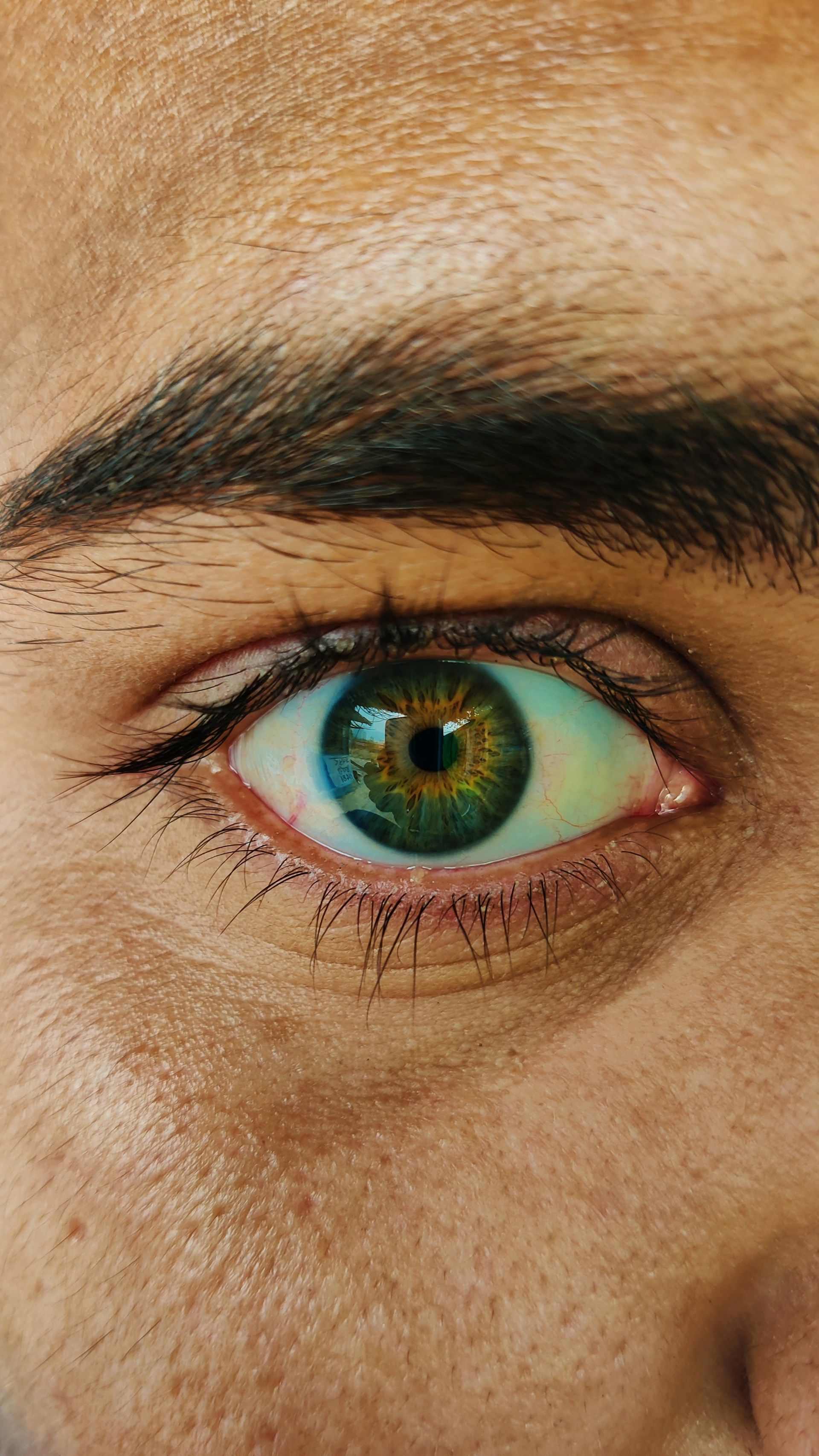
- We examine the eye surface and eyelids. Under magnification the doctor looks at the tear film, the cornea, and the openings of the oil glands along the lid margin.
- We look at oil-gland function. The meibomian glands sit inside your eyelids and produce the oil layer. When they are blocked or underproducing, tears evaporate too fast.
- We explain what we found and build a plan. You should leave understanding which part of the tear film is the problem.
Bring the drops you have already tried, including the boxes, and a current medication list. Several common prescriptions reduce tear production.
Treatment options at our Dry Eye Clinic
Artificial tears add moisture temporarily. They do not open a blocked gland or address inflammation on the eye surface, which is why relief is often short. When blocked oil glands are the driver, that condition has a name: see what is meibomian gland dysfunction.
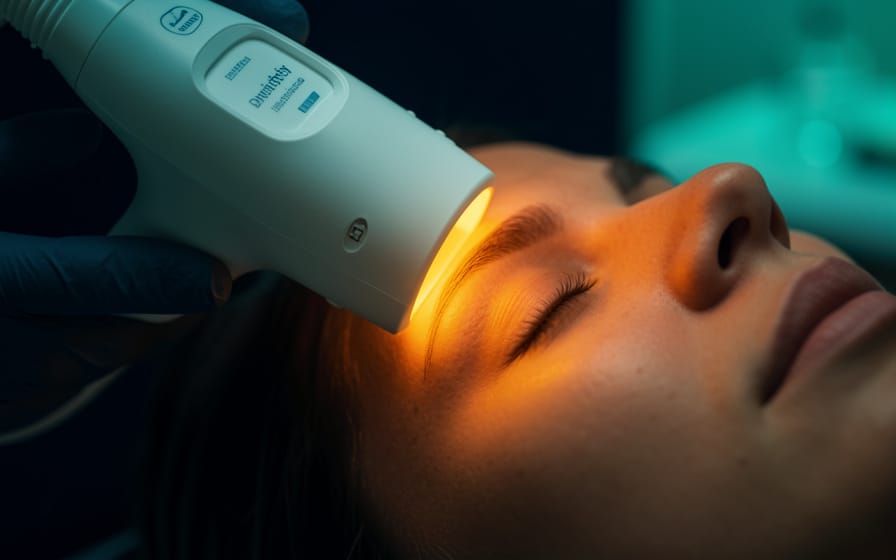
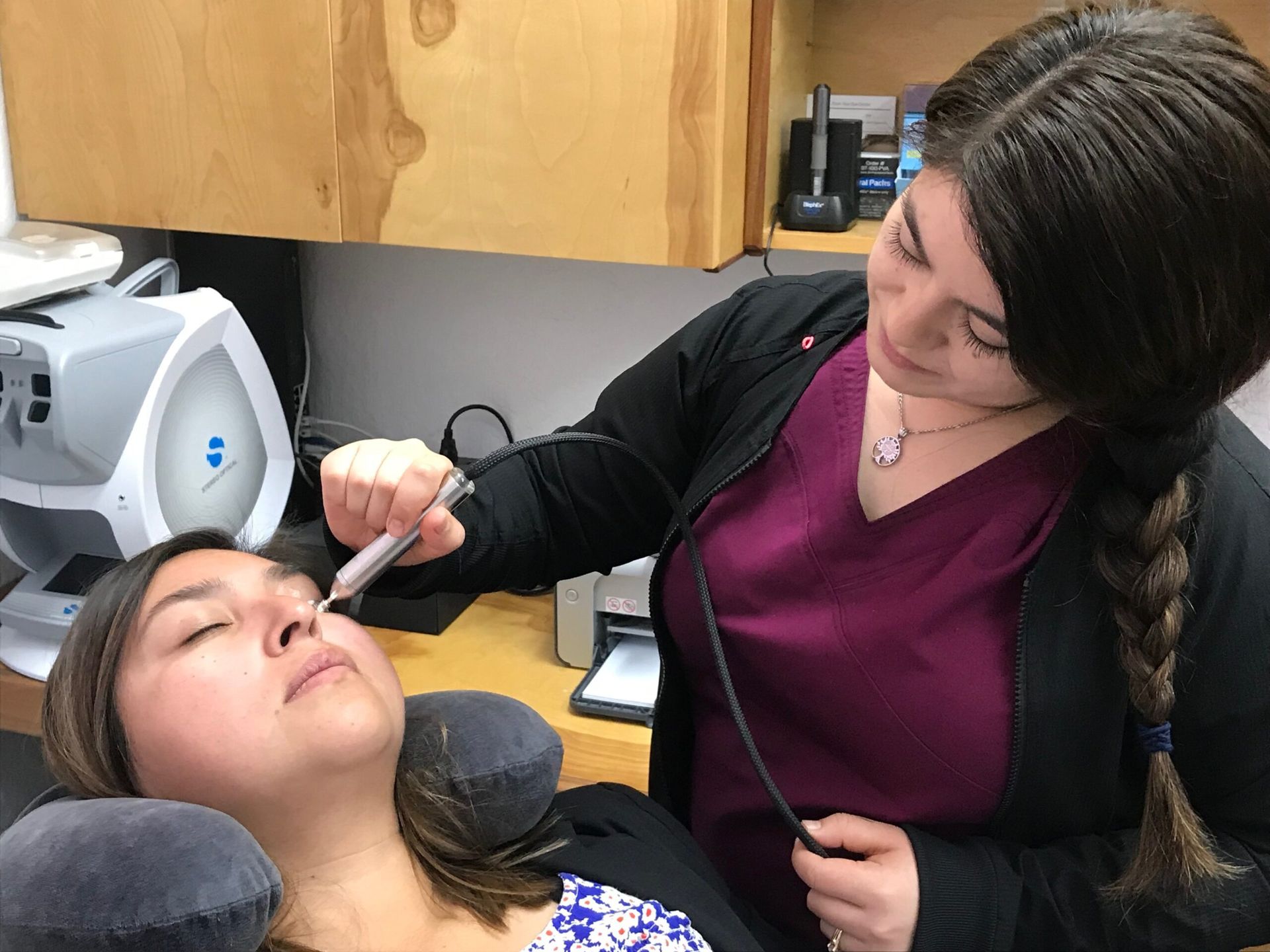
Our dry-eye clinic has equipment-based options in addition to traditional treatment:
- MiBoFlo heat massage. A handheld tip warms to about 108 degrees Fahrenheit. Ultrasound gel is applied for comfort, your eyes stay closed, and the eyelids are massaged with the warm tip. The goal is to improve meibomian gland function.
- Photobiomodulation. A light-based treatment used as part of a dry-eye plan.
- Radiofrequency. Delivered with a Cynosure system, used as part of a dry-eye plan.
Medications still have a role. The difference is that we are not limited to them.
Why treatment is usually a plan, not a single visit
Dry eye tends to be a long-term condition, so treatment is often scheduled as a recurring series rather than one appointment. Follow-up visits let us check whether the approach is working and adjust it.
The first visit identifies what is driving your symptoms and starts treatment. Improvement usually builds over time.
Common questions
Is any of it uncomfortable?
MiBoFlo is a warm massage over closed eyelids. Most people find it comfortable.
Will one visit fix it?
Usually not, and that is normal. Dry eye is managed rather than cured, and a plan works better than a single treatment.
Is dry eye covered by insurance?
Dry eye is a medical condition, so it is often billed to medical insurance rather than a vision plan. Coverage varies. Call the office and our team will check before your visit.
Often yes, though comfort may improve once the underlying problem is treated. Tell the doctor how your lenses feel at the end of the day. More on that in why contacts get uncomfortable by the end of the day.
Get evaluated
If your eyes burn, water, or feel gritty by the afternoon, that is worth looking into.
Request an appointment or call 805-925-9575.