Diabetes can affect the small blood vessels in the retina long before your vision changes. That is the reason for an annual diabetic eye exam even when your eyes feel completely normal.
By the time a diabetic change is noticeable to you, it has usually been developing for a while.
What we are looking for
The retina is the only place in the body where blood vessels can be examined directly, without surgery. That makes an eye exam useful for you and for the doctor managing your diabetes.
During a diabetic eye exam we examine the retina for:
- Small areas of bleeding
- Leaking blood vessels
- Swelling in the central retina
- New, fragile blood vessel growth
We also check the rest of your eye health, since diabetes can affect the lens and other structures too. High blood pressure leaves its own marks on the same vessels, covered in how high blood pressure affects your eyes.
How imaging helps
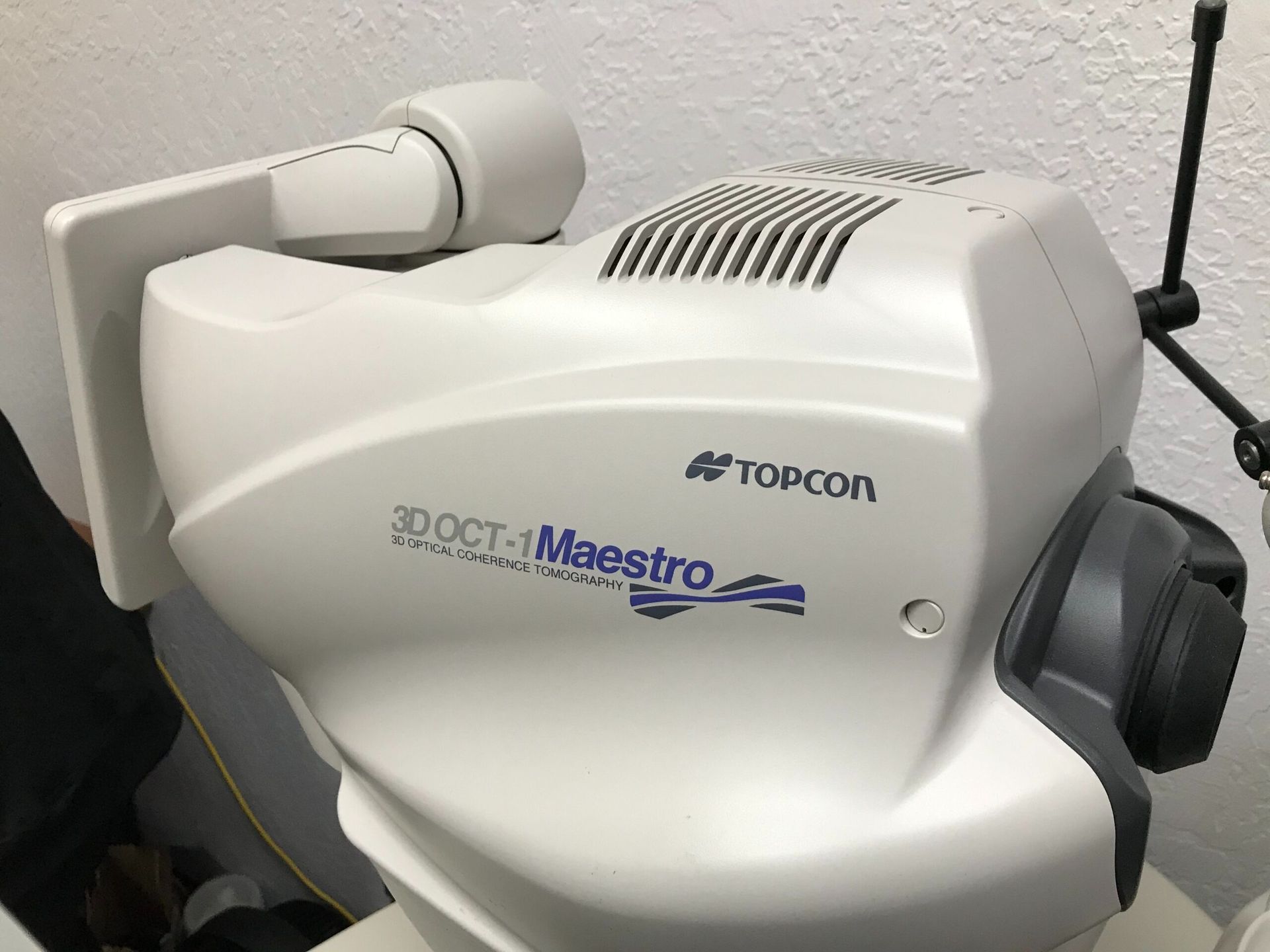
Retinal photography documents what your retina looks like today. OCT imaging produces cross-sectional images that help us examine the layers of the retina and detect swelling that is difficult to see otherwise.
The point is comparison. Placing this year's images beside last year's is how subtle change becomes obvious. A single image is a baseline; a series is information.
How often should I be examined?
For most patients with diabetes, once a year is the general expectation, and more often if the doctor finds something that needs monitoring.
Your own interval depends on your exam findings, how long you have had diabetes, and your overall health. The doctor will tell you when to come back rather than leaving it open.
Blood sugar shows up in your vision
A change in blood sugar control can temporarily shift your prescription. Vision that fluctuates over days or weeks is worth mentioning, because it may say more about your blood sugar than about your glasses. We go into that in can diabetes change your vision or glasses prescription.
It is also a reason we may suggest waiting on a new prescription until things stabilize.
Working with your other doctors
What we find in your eyes can matter to your primary care physician or endocrinologist. When findings are relevant, we can coordinate so your care is connected rather than happening in separate rooms.
If something needs care beyond our scope, we help arrange the referral.
Common questions
My vision is fine. Do I still need this?
Yes. Early diabetic changes usually cause no symptoms. The exam exists to find them before they affect your sight.
Will my eyes be dilated?
Often. A detailed look at the back of the eye is useful in a diabetic exam. Bring sunglasses and consider having someone drive you home.
Is a diabetic eye exam covered?
It is a medical exam, so it is often billed to medical insurance rather than a vision plan. We accept Medicare and CenCal/Medi-Cal. Call our office and our team can help you sort out what applies. See what Medicare covers and CenCal/Medi-Cal coverage.
What if you find something?
The doctor explains what he saw, what it means, and what happens next. Depending on the finding that may be closer monitoring, treatment, or a referral.
Do you have Spanish-speaking staff?
Yes. Our entire staff is bilingual in English and Spanish.
Schedule your diabetic eye exam
If it has been more than a year, this is the one to book.
Request an appointment or call 805-925-9575.